
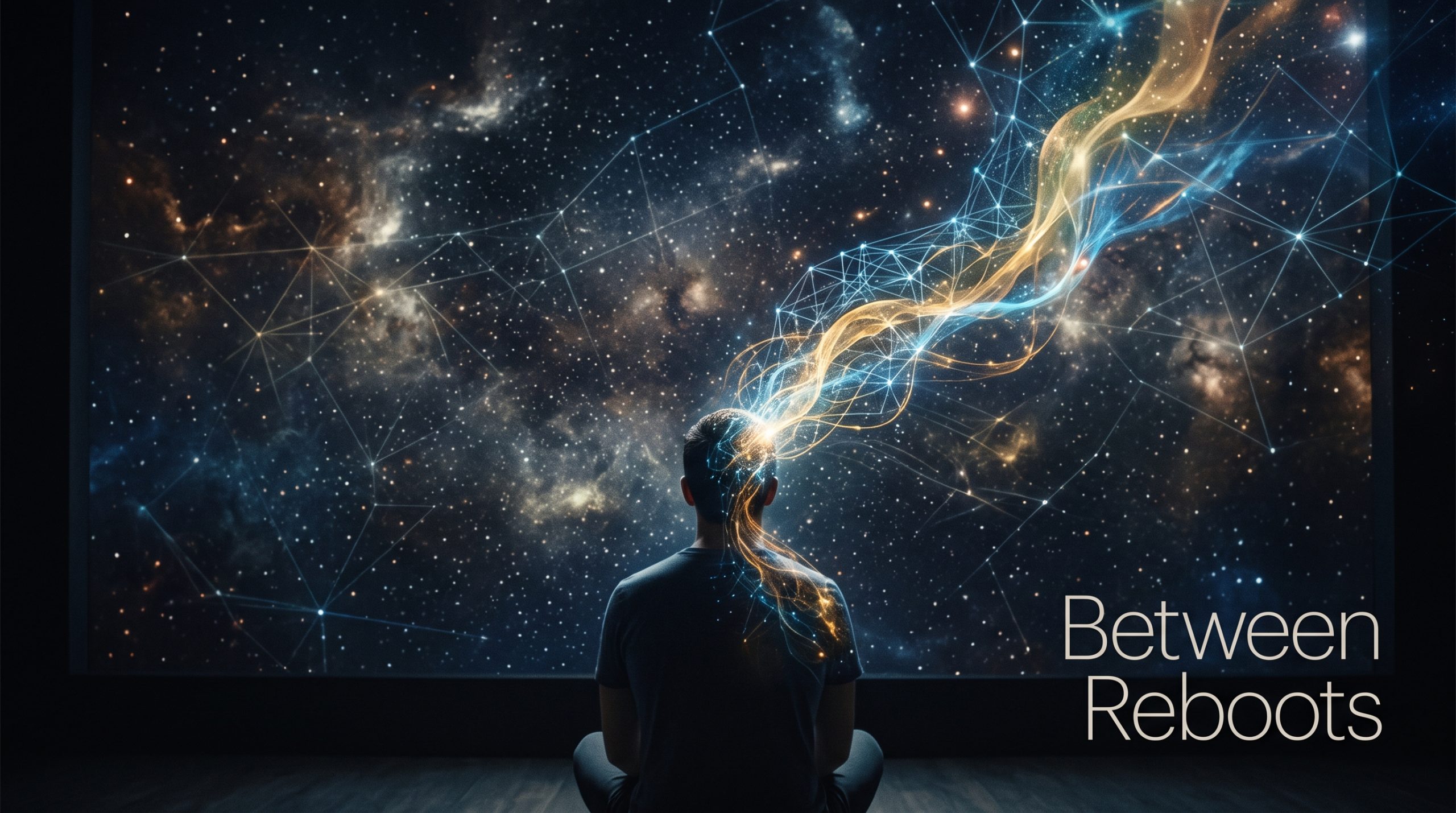
Manifestation culture teaches a simple formula: focus your desire, raise your “vibration,” send the right signal out into the universe — and reality bends to meet it. The formula’s appeal lies in its simplicity. But is there anything underneath it besides a nice metaphor?
The Quantum Physics Myth Behind Manifestation
The argument usually leans on quantum mechanics — or rather, a misreading of it. The observer effect, where measurement affects a particle’s state at the subatomic level, gets dragged up into the macro world with no mechanism to explain how human desire could function as a quantum measurement, reshaping job offers or bank balances. Decoherence — the process by which quantum properties dissolve into larger systems within fractions of a second — makes that bridge physically impossible.
What the Research Actually Found
Still, it wouldn’t be fair to stop at ridicule. Serious attempts to test the idea empirically have existed for decades.
Princeton’s PEAR lab spent nearly thirty years studying whether focused intention could influence random number generators, reporting statistically significant — if microscopically small — deviations. Independent replications failed to reproduce the results, and the lab eventually closed under a wave of methodological criticism.
A similar fate met Daryl Bem’s famous 2011 paper on retrocausality, which became one of the catalysts for what’s now known as psychology’s replication crisis. The pattern repeats: an initial, enthusiastic result, followed by silence when no one can reproduce it under tighter conditions.
Why Visualization Still Works — Just Not the Way You Think
So the scientific footing for “reprogramming” reality through desire is thin, to put it gently. But that doesn’t make the practice itself — visualization, focused attention, naming an intention — meaningless. The mechanism at work is simply something else entirely from what the esoteric literature claims.
Psychologist Gabriele Oettingen, who studies the effects of visualization on goal pursuit, uncovered an uncomfortable fact: purely positive visualization — imagining yourself having already achieved the goal — actually lowers the odds of achieving it. The brain, having tasted the imagined satisfaction, partly relaxes, as if the work were already done.
It only works when visualization is paired with naming the obstacle and building a concrete plan to meet it — a method known as WOOP (wish, outcome, obstacle, plan).
Another real mechanism is the reticular activating system, the brain structure that filters the environment according to what you’ve flagged as important. When a goal stays clear and consistently held in attention, you start noticing more opportunities tied to it — not because reality has changed, but because your attention filter has.
A Network Engineer’s Way of Seeing It
This is where network topology, unexpectedly, offers a precise image for what’s actually happening.
In a Cisco router configuration, two commands look like mirror images of each other: no ip address and ip address 192.168.1.100/24. One disables an interface, the other enables it. The temptation to draw a straight line to “I don’t have” and “I have” affirmations is understandable.
But the technology teaches something subtler. The ip address command only changes the interface’s state because the interface — physical or virtual — already exists, and the router has a real mechanism to bring it up. Issued against an interface that doesn’t exist, the command changes nothing, however correct its syntax.
Why “no shutdown” Is the Better Affirmation
A more accurate analogy for affirmation isn’t ip address on empty space — it’s no shutdown: a command that doesn’t fabricate a state, but simply stops blocking a path that’s already there.
The difference is subtle but essential: it isn’t a lie about an already-achieved state, it’s a refusal to consciously block a route that already exists. Constant “I can’t, I don’t have” functions like a shutdown command — it suppresses initiative even when the resources genuinely exist.
A sturdier kind of affirmation doesn’t sound like “I already have it,” but like a correct entry in a routing table — “I know the path to the destination” — a statement about direction, not a claim about having already arrived.
The Loopback Interface as a Model of Inner Stability
Which leaves the question of where stability comes from in the middle of the journey, when the physical interfaces — relationships, work outcomes, external achievements — inevitably fluctuate, rising and falling on their own.
Network architecture has an elegant answer for this: the loopback interface. Unlike physical ports, a loopback is always up/up, regardless of outside connectivity — its state depends only on the device’s own internal configuration. That’s precisely why loopback addresses are so often used as router IDs in routing protocols: a stable identifier by which a device is recognized on the network, even as every other interface it owns comes and goes.
A sense of inner sufficiency works the same way: an identity core that holds regardless of whether a given external connection is up or down today.
Where the Metaphor Has Its Limits
But the analogy has an honest limit. A pure loopback, with no other interface carrying any traffic, is an isolated system — technically functioning, useless to the network. Pure self-sufficiency with no connection to the outside world stops being strength and becomes enclosure.
The real value of a loopback isn’t in isolation — it’s as an internal source of stability that lets the other, physical interfaces rise and fall freely, without the device ever losing its identity in the process.
The Takeaway
So strip the esoteric wrapping off manifestation language, and underneath it isn’t empty words — it’s a handful of real, testable mechanisms: attentional filtering, obstacle-naming as a non-negotiable part of visualization, a deliberate choice not to block a path that already exists, and a stable internal reference point that lets you absorb the fluctuations of everything external.
The universe isn’t listening for correct syntax. But the system — your own attention, behavior, decisions — is. And that, it turns out, is enough.
Photo generated by Gemini AI